
Idea Hub
OhioX’s Idea Hub is a center of information and shared learning. Here, experts from diverse backgrounds share their thought leadership and research to amplify the ideas, companies and people building the future.
Interested in contributing your own piece? Please fill out our contact form.

Ohio’s rise shows that our playbook works
Under Patrick Tiberi's guidance, the state transitioned from 34th to a premier business hub. This shift validates the 2011 creation of JobsOhio and strategic tax reforms, positioning the region to lead the tech economy through advanced manufacturing and vital data center infrastructure.

Building citizen engagement and trust through government digital strategy
Deloitte’s Holly Scott introduces a property-developer analogy to tear down fragmented agency silos. Highlighting the InnovateOhio platform as a national model, she illustrates how a unified framework connects millions of residents to thousands of apps while driving down technical costs.

People are not line items
Drawing on a powerful papal encyclical, a veteran tech executive critiques Silicon Valley's trend of prioritizing metrics over human dignity. Contrastingly, Midwest institutions and companies offer a sustainable model of responsible capitalism that views human capacity as a lasting asset.

Chetan Kandhari on what it actually takes to scale AI at a Fortune 100
Nationwide’s Chetan Kandhari leads a $1.5 billion AI commitment, shifting the Fortune 100 from experiments to business-led transformation. By pairing innovation with rigorous governance, he’s embedding AI agents as "thought partners" to augment associates and scale responsibly.
The cognitive rust belt is here: Why AI fluency needs anti-stagnation infrastructure
Research indicates that reliance on AI can lead to "cognitive atrophy," with professionals in medicine and tech seeing skills degrade when machines do the thinking. To counter this "Cognitive Rust Belt," organizations must build anti-stagnation infrastructure that keeps humans in the loop.

Inside Rev1 at the Peninsula, Columbus's new home for tech founders (PHOTOS)
Rev1 Ventures has opened Rev1 at The Peninsula, a 43,000-square-foot innovation hub in downtown Columbus. Designed for software and tech startups, the space offers Scaleup Suites and venture services to accelerate capital formation and job creation within Ohio's tech ecosystem.

What Ohio tech leaders are reading, watching, and listening to
No fluff, just the signal. We asked eight Ohio tech leaders—from CEOs to engineering deans—to share the one resource they actually vouch for. From quantum mechanics on YouTube to the psychology of team dynamics, here is the shortlist of what’s helping inspire and inform Ohio's leaders in 2026.

Aplos Data signals a new chapter for Ohio tech
Columbus-based Aplos Data is emerging from stealth to help organizations operationalize AI and real-time data. Focused on implementing Palantir Technologies, the firm unifies fragmented systems into a single "operational layer" that moves beyond analytics to help leaders decide what to do next.
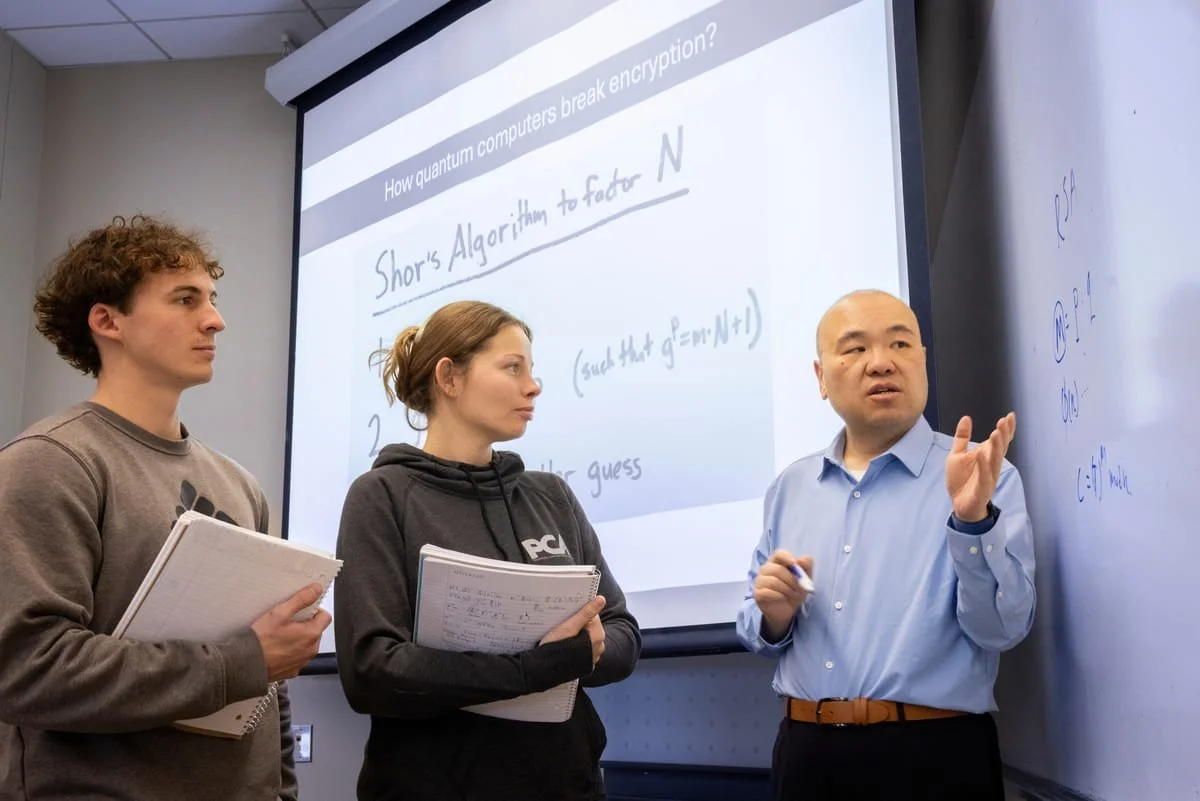
Miami University’s strategic investment in quantum computing — and the workforce behind it
The public Ohio school has launched the nation's only software-focused quantum computing undergraduate degree, partnering with Cleveland Clinic to build a workforce pipeline before the industry catches up

The tools Ohio tech leaders can't work without
Ohio tech leaders are moving beyond generic productivity apps toward AI-native workflows. From Microsoft Copilot and ChatGPT for daily problem-solving to specialized tools like Kiro and Claude Code, these leaders are using AI to shift from "building" to "architecting" solutions.
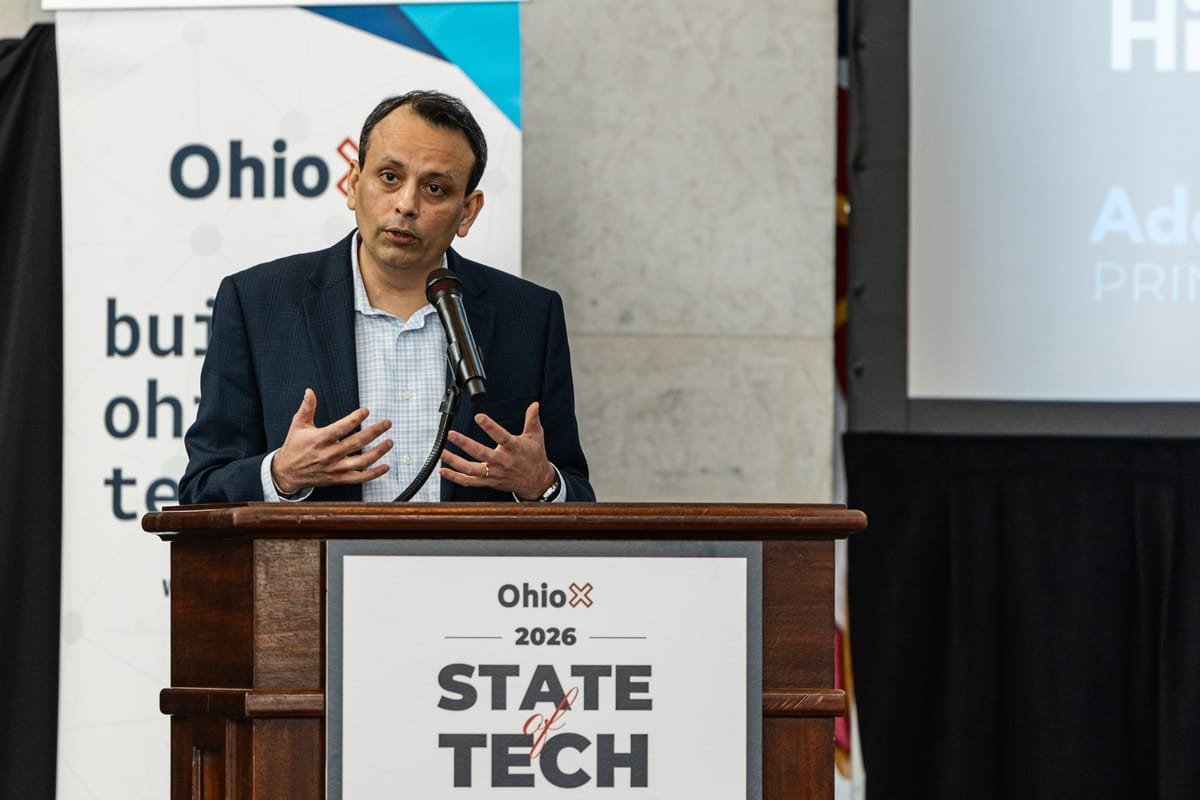
Ohio is poised to lead government AI modernization
Deloitte’s Adarsh Desai highlights Ohio as a national leader in government AI modernization. By moving beyond pilots to scale high-value solutions like fraud detection and natural language constituent services, the state is transforming public sector efficiency and accessibility.
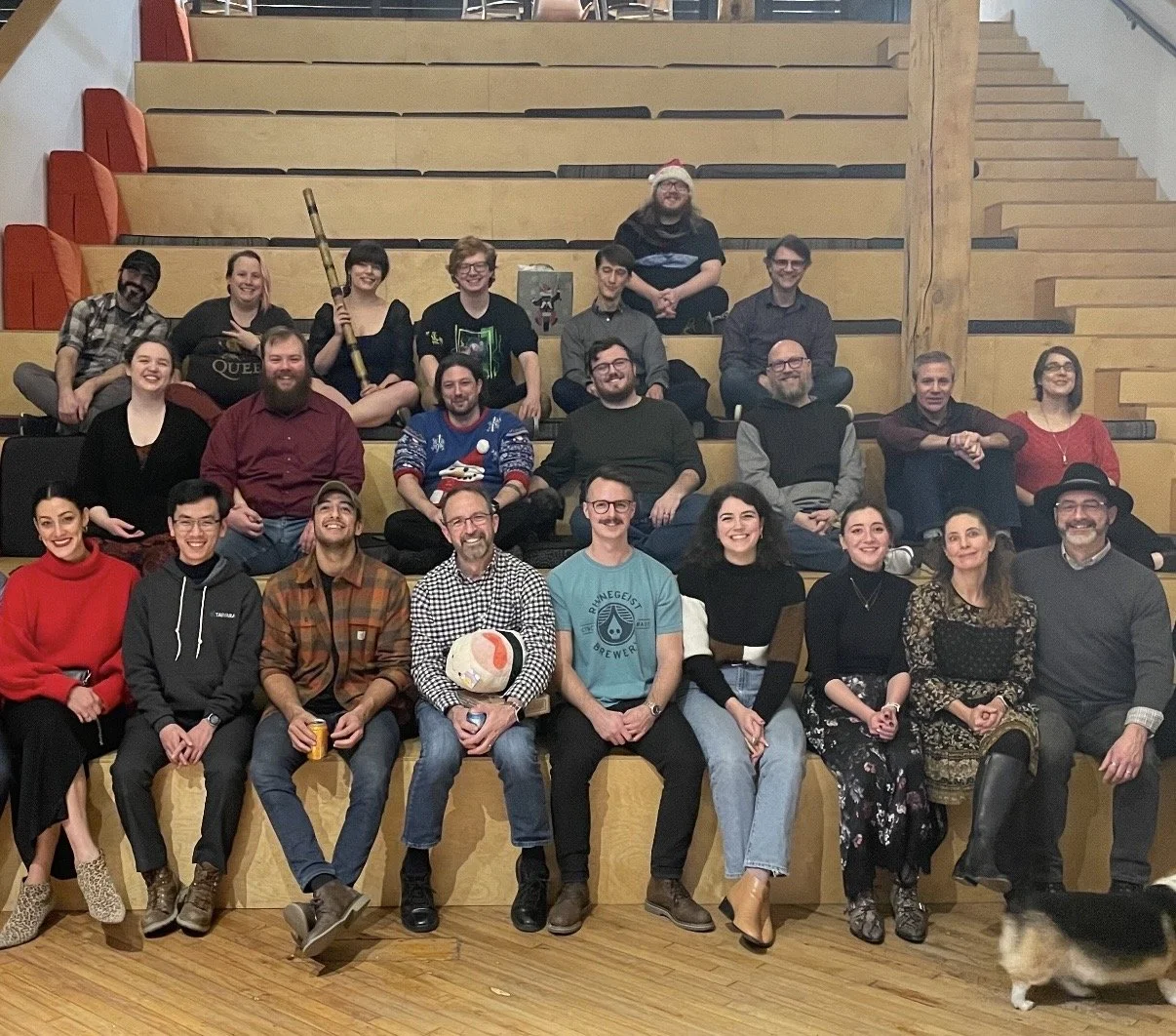
Columbus’s Taivara helps enterprises operate at startup speed with digital co-creation
To bridge the innovation execution gap, this Columbus firm acts as a technical co-founder for established companies. By utilizing fixed-bid structures and blended teams, they help firms validate new digital bets and scale market-ready software without disrupting core business operations.

5 Speakers to know at the 2026 Ohio Tech Summit
The 2026 Ohio Tech Summit features a powerhouse lineup, including leaders from Nationwide, Path Robotics, Anduril Industries, and more. Focused on AI, national security, and re-industrialization, the May 14th event in Columbus connects Ohio's tech leaders.

The end of "Random Acts of AI": Turning employee demand into strategic power
Mel McGee shares that workers are ready for AI, but generic training fails to drive results. For the C-Suite and HR, the key is building a "human-first" talent strategy that prioritizes behavior change over access, replacing "Random Acts of AI" with structured, safe innovation and governed experimentation.
The Unknown Unknowns of AI: Why “AI Fluency” is your only defense
Srini Koushik argues that AI Fluency, not just literacy, is the only defense against systemic risk. By moving beyond "machine-speak" to a native understanding, leaders can use a 5-pillar framework to navigate "unknown unknowns" and re-architect competitive strategy.
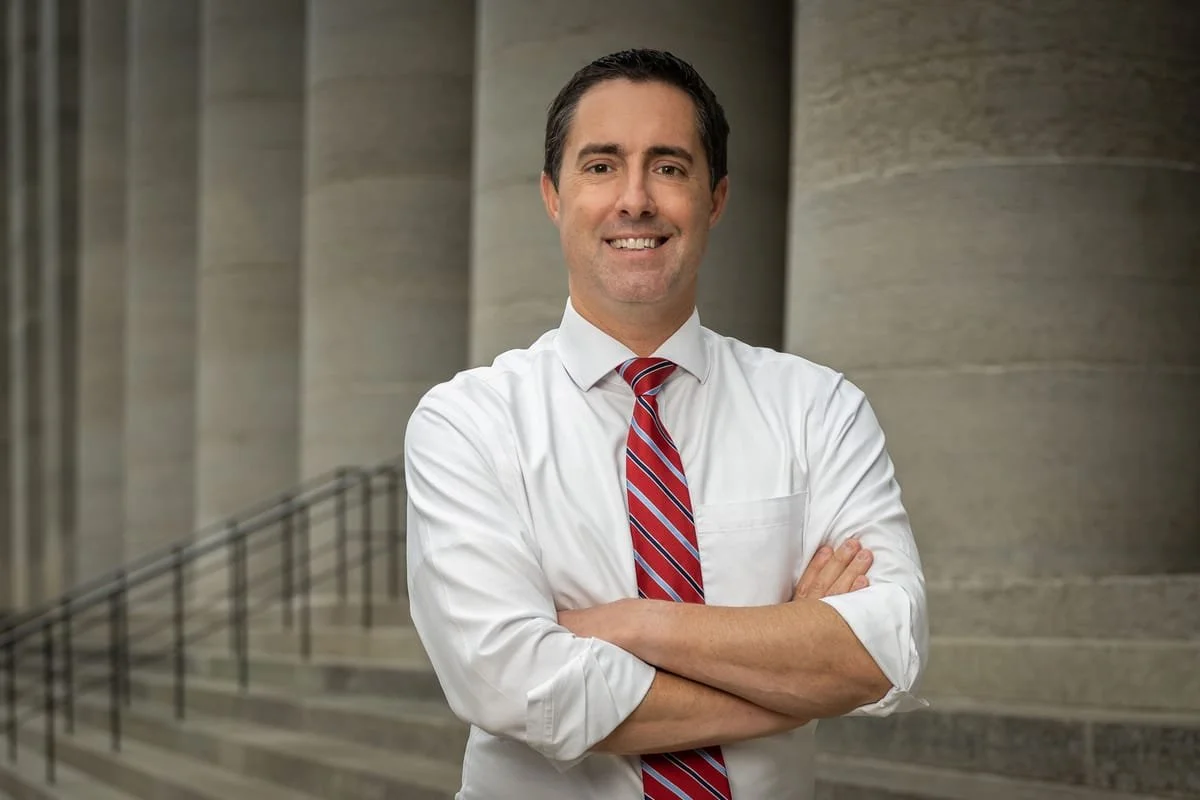
Modern Government in Action: How Ohio is using AI and innovation to improve service
Ohio is leveraging artificial intelligence to modernize state operations and cut bureaucratic red tape. The state is embracing innovation to deliver faster, more efficient results for businesses and voters, writes Ohio Secretary of State Frank LaRose.

Ohio’s 2026 Venture Capital Gains Deduction: A Catalyst for Innovation and Investment—Op-Ed
Historically, much of the venture capital used to fund Ohio-originated innovation has flowed from outside our borders, writes Jon Cross in an op-ed for OTN.
A Workforce Strategy for the Age of AI: Why the future of work isn't about replacement—it's about a great reshuffle
While CEOs invest in AI, employee anxiety creates friction. Shifting from a "Replacement" era to a "Reshuffle," Srini Koushik argues that AI unbundles skills from roles rather than making humans obsolete. Leaders must move beyond automation to integrate cognitive thinking partners.

Ohio Chamber Foundation Data Center Study: A strategic blueprint for digital growth—Op-Ed
The Ohio Chamber Foundation Data Center Study details the state's digital infrastructure boom, which has attracted over $40 billion in private investment. This growth is rebranding the former manufacturing/agriculture hub as the "Silicon Heartland," with Columbus emerging as a top-tier global hub.
AI Is the new business mandate. Why do most leaders get it wrong?
Viewing AI as a mere optimization tool is the "horseless carriage" syndrome. Right Brain Labs CEO Srini Koushik argues the technology represents a civilizational shift in agency and details the urgent need for leaders to move beyond basic literacy toward true AI fluency.